
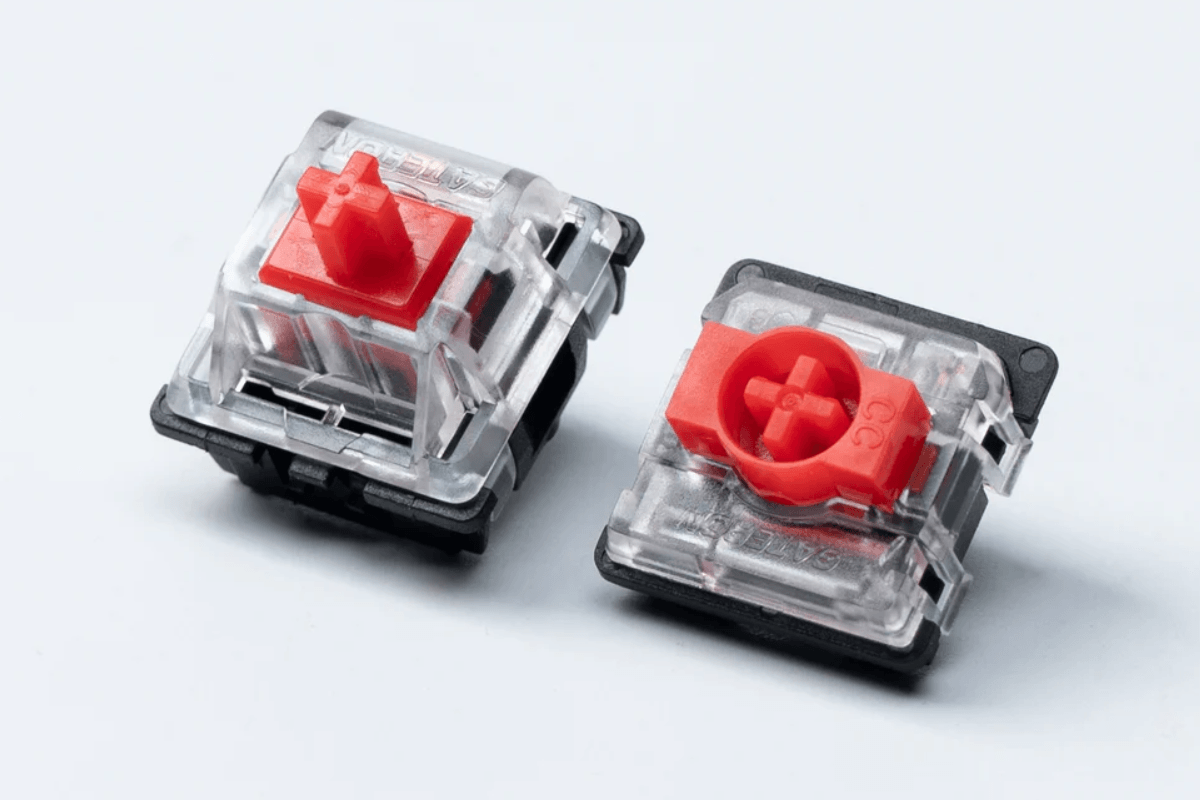
Mechanische Switches spielen eine große Rolle dabei, wie sich eine Tastatur anfühlt, klingt und reagiert – sowohl beim Spielen als auch beim Tippen. Während standardmäßige mechanische Switches weiterhin die traditionelle Wahl sind, erfreuen sich Low-Profile-Switches aufgrund ihres schlankeren Designs und des kürzeren Tastenhubs zunehmender Beliebtheit, insbesondere bei Nutzern, die nach einer mechanischen Low-Profile-Tastatur suchen. In diesem Leitfaden vergleichen wir Low-Profile- und Standard-Switches, um dir zu helfen, ihre wichtigsten Unterschiede zu verstehen und zu entscheiden, welcher Typ besser zu deinem Gaming-Setup und deinen Tipp-Vorlieben passt.
Was sind mechanische Low-Profile-Switches?
Mechanische Low-Profile-Switches sind mit einem niedrigeren Gehäuse und einem reduzierten Tastenhub im Vergleich zu Standard-Switches konstruiert. Dadurch können Tastaturen ein insgesamt schlankeres Profil aufweisen und bieten dennoch das taktile und reaktionsschnelle Gefühl, das für mechanische Tastaturen typisch ist. Da die Tasten näher an der Platine sitzen, erfordert jeder Tastendruck weniger vertikale Bewegung, wodurch sich Tippen und Spielen schneller und direkter anfühlen können.

Diese Schalter findet man häufig in flachen Gaming-Tastaturen und tragbaren mechanischen Tastaturen. Modelle wie das CUTIEQ NEO84 sind ein gutes Beispiel dafür, wie ein flaches Design einen kompakten Formfaktor mit einem reaktionsschnellen mechanischen Gefühl verbinden kann. Sie sind besonders attraktiv für Nutzer, die einen flacheren Tippwinkel, ein kompaktes Schreibtisch-Setup oder ein Gefühl bevorzugen, das näher an einer Laptop-Tastatur liegt, ohne auf die Leistung mechanischer Schalter zu verzichten.
Was sind mechanische Standardschalter?
Mechanische Standardschalter verwenden ein höheres Gehäuse und bieten in der Regel mehr Tastenhub als Low-Profile-Schalter. Sie bieten das traditionelle mechanische Tastaturgefühl, das vielen Nutzern vertraut ist, mit einem tieferen Tastendruck und einer größeren Auswahl an Schalteroptionen, einschließlich linearer, taktiler und klickender Designs.

Sie werden auch häufig in Gaming-Tastaturen, individuellen mechanischen Tastaturen und Hot-Swap-Tastaturen verwendet, da sie eine breitere Kompatibilität mit Schaltern und Tastenkappen bieten. Für Nutzer, die Wert auf Individualisierung, ein ausgeprägteres Tippgefühl und eine größere Auswahl an Schaltereigenschaften legen, bleiben mechanische Standardschalter die vielseitigere Wahl.
Low-Profile- vs. Standardmechanische Schalter: Hauptunterschiede
Low-Profile- und Standard-Mech-Tastenschalter unterscheiden sich hauptsächlich in Höhe, Tastenhub, Tippgefühl und Anpassungsmöglichkeiten. Low-Profile-Schalter sind niedriger und erfordern normalerweise weniger Bewegung pro Tastendruck, während Standardschalter einen tieferen Hub und ein traditionelleres mechanisches Gefühl bieten.
| Merkmal | Low-Profile-Schalter | Standard-Mechanikschalter |
| Schalterhöhe | Niedriger | Höher |
| Tastenhub | Niedriger | Länger |
| Tippgefühl | Schnell und direkt | Tiefer und traditioneller |
| Tastaturprofil | Schlanker | Höher |
| Tragbarkeit | Besser | Weniger kompakt |
| Switch-Vielfalt | Eingeschränkter | Große Auswahl |
| Tastenkappen-Kompatibilität | Eingeschränkter | Breitere Kompatibilität |
| Individualisierung | Limitierte Auflage | Umfangreich |
Im Allgemeinen sind Low-Profile-Schalter eine gute Wahl für Nutzer, die ein schlankes Design, einen kürzeren Tastenhub und Portabilität schätzen, was sie gut geeignet macht für eine kompakte mechanische Tastatur. Standardmechanische Schalter eignen sich besser für Nutzer, die mehr Anpassungsmöglichkeiten, eine breitere Tastenkappen-Kompatibilität und das klassische mechanische Tastaturerlebnis wünschen.

Welcher Schalter ist schneller für Gaming?
Low-Profile-Schalter können sich beim Gaming schneller anfühlen, da ihr kürzerer Tastenhub die Distanz verringert, die Ihre Finger bei jedem Tastendruck zurücklegen müssen. Dies kann in schnellen Spielen nützlich sein, bei denen schnelle Bewegungen, wiederholte Eingaben und schnelle Reaktionen wichtig sind.

Die Schalterhöhe allein bestimmt jedoch nicht die Gaming-Geschwindigkeit. Faktoren wie Betätigungspunkt, Rückstellweg, Schaltertyp und Abfragerate der Tastatur können einen ebenso großen oder größeren Einfluss auf die Reaktionsfähigkeit haben. Auch Standard-Mechanikschalter können sich für Gaming hervorragend eignen, insbesondere wenn sie mit kurzen Betätigungswegen oder Rapid-Trigger-Technologie entwickelt wurden. Letztlich hängt die schnellere Option vom jeweiligen Schalter und Ihrer persönlichen Präferenz ab, nicht einfach davon, ob Sie Low-Profile statt Standard wählen.
Welchen mechanischen Schaltertyp sollten Sie wählen?
Der richtige Schaltertyp hängt davon ab, wie Sie Ihre Tastatur nutzen und welches Gefühl Sie bevorzugen. Wählen Sie mechanische Low-Profile-Schalter, wenn Sie eine schlankere Tastatur, einen kürzeren Tastenhub und ein schnelles, direktes Tipp- oder Gaming-Erlebnis wünschen. Sie eignen sich auch gut für Nutzer, die von Laptop-Tastaturen kommen, oder für diejenigen, die ein flacheres Schreibtisch-Setup bevorzugen.

Wählen Sie Standard-Mechanikschalter, wenn Sie einen tieferen Tastenhub, ein traditionelleres mechanisches Gefühl und mehr Anpassungsmöglichkeiten schätzen. Sie bieten in der Regel eine größere Auswahl an Schaltertypen, Tastenkappen und kompatiblen Tastaturen. Für Gaming können sich beide Optionen gut eignen, daher sollten letztlich Komfort, Betätigungsgefühl und Ihr bevorzugtes Tastaturdesign Ihre Wahl leiten. Wenn Sie verschiedene mechanische Tastaturoptionen vergleichen, bietet der GamePeripherals Official Store eine Reihe von Gaming-Tastaturen, die für unterschiedliche Schalterpräferenzen und Spielstile entwickelt wurden.
FAQs
Sind Low-Profile-Schalter besser für Gaming?
Nicht unbedingt. Low-Profile-Schalter haben oft einen kürzeren Tastenhub, was Eingaben schneller erscheinen lassen kann, aber die Gaming-Leistung hängt auch vom Auslösepunkt, der Rücksetzdistanz, der Polling-Rate und dem spezifischen Schalterdesign ab.
Sind Low-Profile-Schalter leiser als Standard-Schalter?
Das können sie sein, aber die Schalterhöhe allein bestimmt nicht den Geräuschpegel. Der Klang hängt mehr vom Schaltertyp, der Tastaturkonstruktion, den Tastenkappen, der Schmierung und der Anschlagkraft ab.
Kann man Low-Profile-Schalter durch Standard-Mechanik-Schalter ersetzen?
Normalerweise nicht. Low-Profile-Schalter und Standard-Schalter verwenden oft unterschiedliche Abmessungen, Befestigungssysteme und Tastenkappendesigns, daher hängt die Kompatibilität von der jeweiligen Tastatur ab.
Sind Low-Profile-Mechanik-Tastaturen gut zum Tippen?
Ja. Sie können für Nutzer bequem sein, die einen kürzeren Tastenhub und einen niedrigeren Tippwinkel bevorzugen. Allerdings bevorzugen manche Tippende den tieferen Hub und das ausgeprägtere Gefühl herkömmlicher mechanischer Schalter.
Bieten herkömmliche mechanische Schalter mehr Anpassungsmöglichkeiten?
In den meisten Fällen ja. Herkömmliche mechanische Schalter bieten in der Regel ein größeres Ökosystem an kompatiblen Schaltern, Tastenkappen und individuellen Tastaturkomponenten.

Einen Kommentar hinterlassen
Diese Website ist durch hCaptcha geschützt und es gelten die allgemeinen Geschäftsbedingungen und Datenschutzbestimmungen von hCaptcha.