
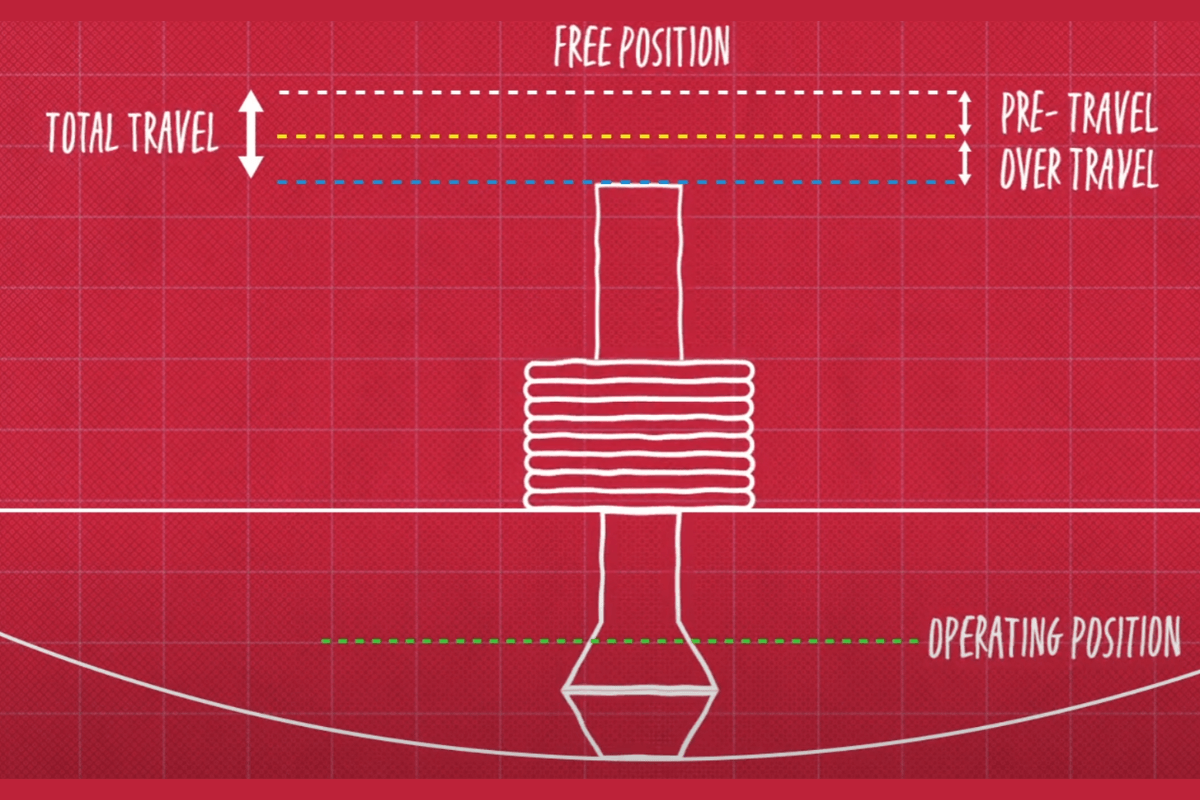
When comparing keyboard switches, you may see specifications such as 2.0 mm pre-travel and 4.0 mm total travel. These numbers describe different parts of a key's downward movement and can influence how responsive or deep a switch feels. Understanding switch pre-travel can make it easier to compare gaming and mechanical keyboards without assuming that a shorter number is always better.
In simple terms, pre-travel is the distance a key moves before its input actuates, while total travel is the full distance from the key's resting position to bottom-out. Both measurements are typically given in millimeters, but they describe different stages of the same keypress.
Pre-Travel vs Total Travel: Quick Comparison
| Feature | Pre-Travel | Total Travel |
| What it measures | Distance before actuation | Full downward key movement |
| Starting point | Resting position | Resting position |
| Ending point | Actuation point | Bottom-out |
| Common unit | Millimeters (mm) | Millimeters (mm) |
| Main effect | When input registers | How deep the full press feels |
| Gaming relevance | Can influence responsiveness | Influences overall keypress feel |
The exact values vary by switch design. Always check the specifications for the individual switch rather than assuming all mechanical, optical, or magnetic switches use the same distances.
What Is Switch Pre-Travel?
Pre-travel is the distance a key moves downward from its resting position before the keyboard registers an input. When comparing the keyboard switch actuation point, pre-travel is an important measurement because it shows how far a key must move before the input is recognized.For example, if a switch has 2.0 mm of pre-travel, the key must travel approximately that distance before actuation occurs. A shorter keyboard switch travel distance before actuation can make a key feel more immediate, although the actual experience also depends on switch force, keyboard construction, keycaps, and the user's typing technique.

This specification is particularly relevant to gamers because repeated inputs can benefit from responsive actuation. However, very short pre-travel can also make accidental keypresses easier for some users.
What Is Total Travel?
Total travel measures how far the switch can move from its resting position to its physical bottom-out point.
Imagine a switch with 2.0 mm pre-travel and 4.0 mm total travel. The input registers around the 2.0 mm point, but the key can continue moving until it reaches approximately 4.0 mm of total downward travel.

This distinction is important because a key does not need to bottom out for an input to register. Many users naturally press beyond the actuation point, especially during fast typing or intense gaming.
Pre-Travel vs Actuation Point: Are They the Same?
The terms are closely related and are sometimes used interchangeably in product specifications, but context matters. Pre-travel describes the physical distance traveled before actuation, while actuation point refers to the position at which the input is registered.
With conventional mechanical keyboard switches, this actuation position is generally determined by the switch's physical design. You usually cannot change it through keyboard software.

Hall Effect magnetic keyboards are different. Compatible models can allow users to configure the actuation point digitally within a supported range, making the relationship between key travel and actuation more customizable.
Does Shorter Pre-Travel Make a Keyboard Faster?
A shorter pre-travel distance means the key does not need to move as far before registering an input. In that physical sense, the input can be triggered earlier in the keypress.
However, shorter pre-travel should not be confused with lower system latency. Keyboard latency also depends on factors such as scanning, firmware, connection type, polling implementation, and the computer or game.

Extremely sensitive actuation may not suit everyone either. If you frequently rest your fingers heavily on WASD, a very short actuation distance can increase the likelihood of unintended inputs.
Which Travel Distance Is Best for Gaming?
There is no single ideal value for every gamer. Players who prioritize highly responsive movement may prefer shorter pre-travel or adjustable actuation, particularly for FPS titles where directional inputs are frequent.
For general gaming and typing, a moderate actuation distance may provide a better balance between responsiveness and avoiding accidental presses. When choosing a GamePeripherals gaming keyboard, it is also worth considering switch force, as it changes how sensitive each key feels even when two switches have similar travel measurements.

Instead of shopping by the lowest millimeter figure, choose based on your games, typing habits, and preferred key feel.
FAQs
Is pre-travel the same as total travel?
No. Pre-travel measures how far the key moves before actuation, while total travel measures the entire distance from the resting position to bottom-out.
Is shorter pre-travel better for gaming?
It can make a key actuate earlier in its downward movement, which some gamers prefer. However, very short actuation can also increase accidental inputs, so shorter is not automatically better.
What does 2 mm pre-travel mean?
It means the key travels approximately 2 mm from its resting position before reaching its specified actuation point.
What does 4 mm total travel mean?
A 4 mm total travel specification means the switch can move approximately 4 mm from its resting position to its physical bottom-out point.
Can you change switch pre-travel?
Traditional mechanical switches generally have a fixed physical actuation position. Compatible Hall Effect keyboards can offer adjustable actuation through software, although the available range varies by model.
Does shorter key travel reduce keyboard latency?
Not necessarily. Shorter pre-travel can reduce the physical movement required before actuation, but choosing a GamePeripherals hall effect keyboard involves more than travel distance, as overall input latency also depends on the keyboard's electronics, firmware, scanning, connection, and other factors.


Leave a comment
This site is protected by hCaptcha and the hCaptcha Privacy Policy and Terms of Service apply.