
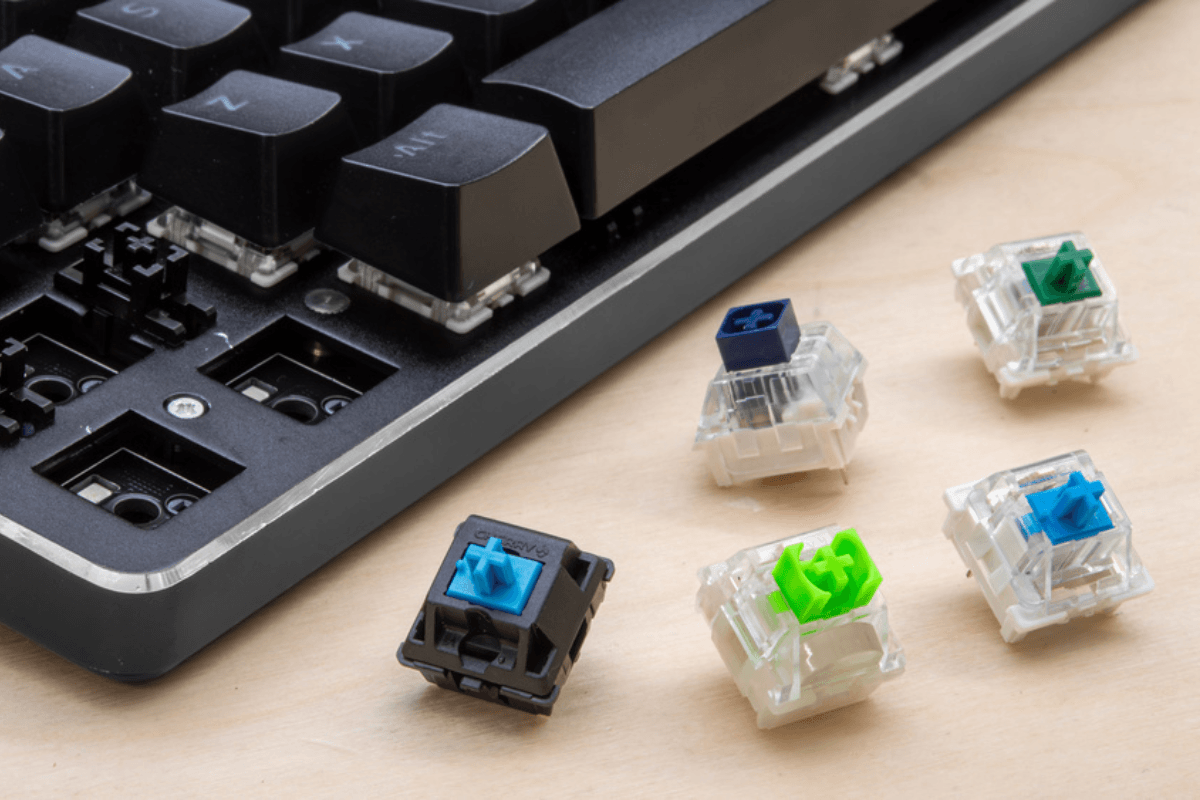
If you have ever switched from a standard office keyboard to a mechanical keyboard, one of the first things you probably noticed was how different every keypress felt. Some switches are smooth and light, others provide a noticeable bump, and some deliver a distinct click with every press.
Those differences come from the tiny mechanisms underneath each keycap. Understanding how mechanical keyboard switches work can make it much easier to choose a keyboard that matches the way you game, type, and use your PC every day.
What Is a Mechanical Keyboard Switch?
A mechanical switch is the individual mechanism underneath each key on a mechanical keyboard. Instead of using a single rubber membrane across the board, traditional mechanical keyboards give each key its own switch mechanism.
When you press a key, components inside the switch move until the input reaches its actuation point. The keyboard then detects that input and sends the corresponding command to your computer.
This individual-switch design is one reason mechanical keyboards can offer so many different typing experiences. Changing the switch can affect smoothness, resistance, sound, tactile feedback, and how far you need to press before a key actuates.
What's Inside a Mechanical Keyboard Switch?
Although switch designs vary, a typical mechanical switch contains several key components:
- Stem: The moving part that travels downward when you press the key.
- Spring: Provides resistance and pushes the key back to its resting position.
- Metal contacts: Register the keypress when the switch reaches its actuation point.
- Upper housing: Holds and guides the upper part of the mechanism.
- Bottom housing: Supports the internal components and connects the switch to the keyboard.

The exact shape and material of these components can change the feel of a switch. Even two switches that look almost identical from the outside may feel noticeably different once you start typing or gaming.
What Happens When You Press a Key?
A keypress starts when your finger pushes the keycap downward. The keycap moves the stem, which compresses the spring inside the switch.
As the stem continues downward, the switch eventually reaches its actuation point. In a conventional mechanical design, movement inside the switch causes the electrical contacts to register the input. The keyboard's electronics detect this change and send the keystroke to your computer.
You do not necessarily need to press the key all the way to the bottom for it to register. This is why pre-travel and total travel are different specifications: pre-travel describes the distance before actuation, while total travel describes how far the switch can move overall.

When comparing keyboards at the GamePeripherals Online Store, these switch characteristics are worth considering alongside layout, connectivity, keycap design, and other features. The right combination depends heavily on how you prefer your keyboard to feel.
Linear vs Tactile vs Clicky Switches
Most conventional mechanical switches fall into three broad categories: linear, tactile, and clicky.
Linear Switches
Linear switches move smoothly from the beginning of the keypress to the bottom without an intentional tactile bump. Their consistent travel makes them popular among gamers who prefer smooth, repeated inputs.
They are not automatically faster than other switch types, though. Actual keyboard latency depends on more than the switch feel alone.
Tactile Switches
Tactile switches provide a noticeable bump during the keypress. This feedback helps you feel when you are moving through the switch's tactile event without requiring a loud click.
Many people enjoy tactile switches for a mix of gaming and typing because they provide physical feedback while generally being less intentionally clicky than clicky switches.
Clicky Switches
Clicky switches combine tactile feedback with a deliberate audible click. They can provide a very distinctive typing experience, which some users love and others find too loud.
They are often appealing to people who enjoy strong feedback from each keystroke, but noise can be an important consideration in offices, shared rooms, or late-night setups.

Do Switches Affect Gaming Performance?
Switches can affect how responsive and comfortable a keyboard feels, but they are only one part of gaming performance. Firmware, scanning behavior, connection type, polling implementation, and other electronics can also contribute to input latency.
For fast-paced games, some players enjoy smooth linear switches because repeated movements can feel effortless. Others prefer tactile switches because the physical feedback makes each keypress more noticeable. The best choice ultimately depends on the type of feedback and resistance that feels natural to you.
If you are looking for a new gaming keyboard, GamePeripherals.com offers mechanical keyboards from different brands, giving players more options to compare switch types, layouts, connectivity, and overall design. When choosing among GamePeripherals mechanical keyboards, consider the complete keyboard rather than focusing on the switch alone, as the right combination of features can make a bigger difference to your overall gaming experience.
FAQs
What is the actuation point of a keyboard switch?
The actuation point is the point during a keypress at which the keyboard registers the input. It occurs before the switch necessarily reaches the bottom of its travel.
Why do mechanical switches feel different?
Spring weight, stem geometry, housing design, materials, lubrication, tactile mechanisms, and other construction details can all influence how a switch feels.
Can you replace mechanical keyboard switches?
If the keyboard supports hot-swappable switches, compatible switches can generally be removed and replaced without soldering. Soldered keyboards require additional tools and technical work.

Laisser un commentaire
Ce site est protégé par hCaptcha, et la Politique de confidentialité et les Conditions de service de hCaptcha s’appliquent.